
Mobile Chicken House ROI: What to Expect From Your Investment
We grew up on a farm in Lancaster County, helping out with an organic dairy and mobile-pastured chickens from an early age. When we started running our own egg business, we ran into a problem: the equipment on the market took a lot of labor, produced average results, and was hard to move or maintain.
So in 2009, we built our own. The Mobile Chicken House is designed to be efficient, easy to move, durable, and automated enough to save real labor. Our egg production grew, the eggs came out cleaner, and the hens laid more consistently. We've been designing, building, and selling mobile chicken houses ever since.
That backstory is why the return on investment (ROI) in a mobile chicken house matters to us. We built this equipment because the alternative was costing us time and money every day. Here's how we think about that mobile chicken house ROI, and how to think it through for your own operation.
TL;DR: Mobile Chicken House ROI
- ROI on a mobile chicken house covers more than egg sales. It includes labor hours saved, feed savings, lower health costs, and stronger egg quality.
- Long-term value builds through better pasture management, healthier flocks, reliable feed and water systems, and operational flexibility.
- Your actual ROI depends on flock size, how often you move the house, labor efficiency, equipment durability, and maintenance costs.
- Both small family farms and larger pasture-raised producers see real returns, just in different ways.
- The upfront cost is usually higher than a stationary coop, but a well-designed mobile house is built to pay for itself over time.
What Does ROI Mean for a Mobile Chicken House?
Return on investment is simple in theory: what you get back compared to what you spent. On a poultry farm, though, "what you get back" covers more than just egg sales.
A mobile chicken house can pay you back through:
- Egg revenue from a healthier, more consistent flock
- Labor hours saved through automated feeding, watering, and egg collection
- Feed savings from less waste and better pasture access
- Lower health costs from a flock that gets sick less often
- Stronger egg quality, which often supports better pricing
Sure, pastured poultry is a more expensive venture, but you shouldn’t be losing money. The American Pastured Poultry Producers Association frames pastured poultry as a model that's meant to make economic sense, not just an ethical choice.
Where the Long-Term Value Comes From
So where does long-term value actually come from? The return on a mobile chicken house builds slowly, through better pasture, healthier birds, and fewer wasted hours.
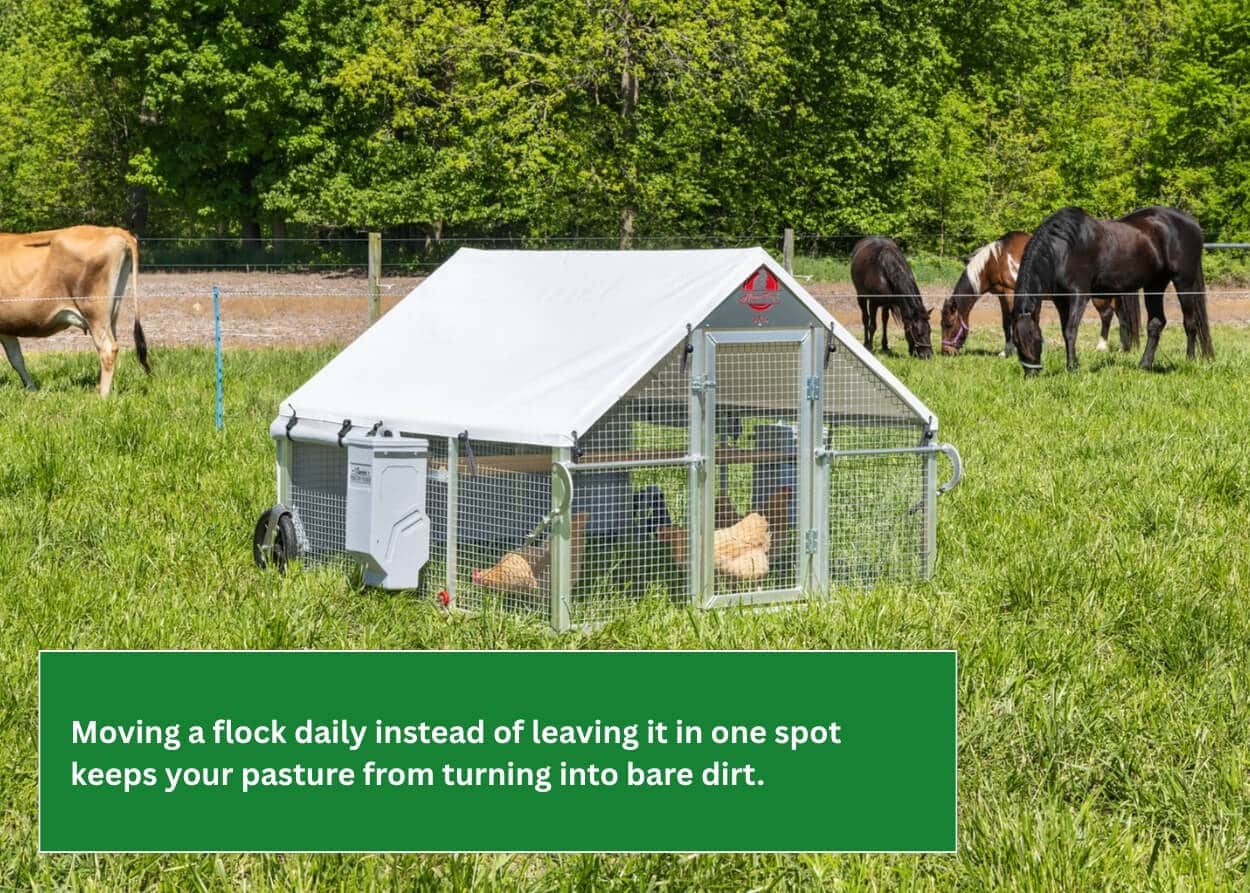
- Better pasture management. Moving a flock daily instead of leaving it in one spot keeps your pasture from turning into bare dirt. Rotational grazing gives grass time to recover, which means more forage for your birds and healthier ground long-term. Poultry science research from UC Davis backs this up, noting that rotating flocks through pasture helps prevent overgrazing and keeps nutrient cycling between birds and land working the way it should.
- Healthier flocks. Fresh ground means less exposure to built-up manure and fewer parasites. Mobile housing also keeps flock sizes smaller than a large stationary barn, which supports basic biosecurity.
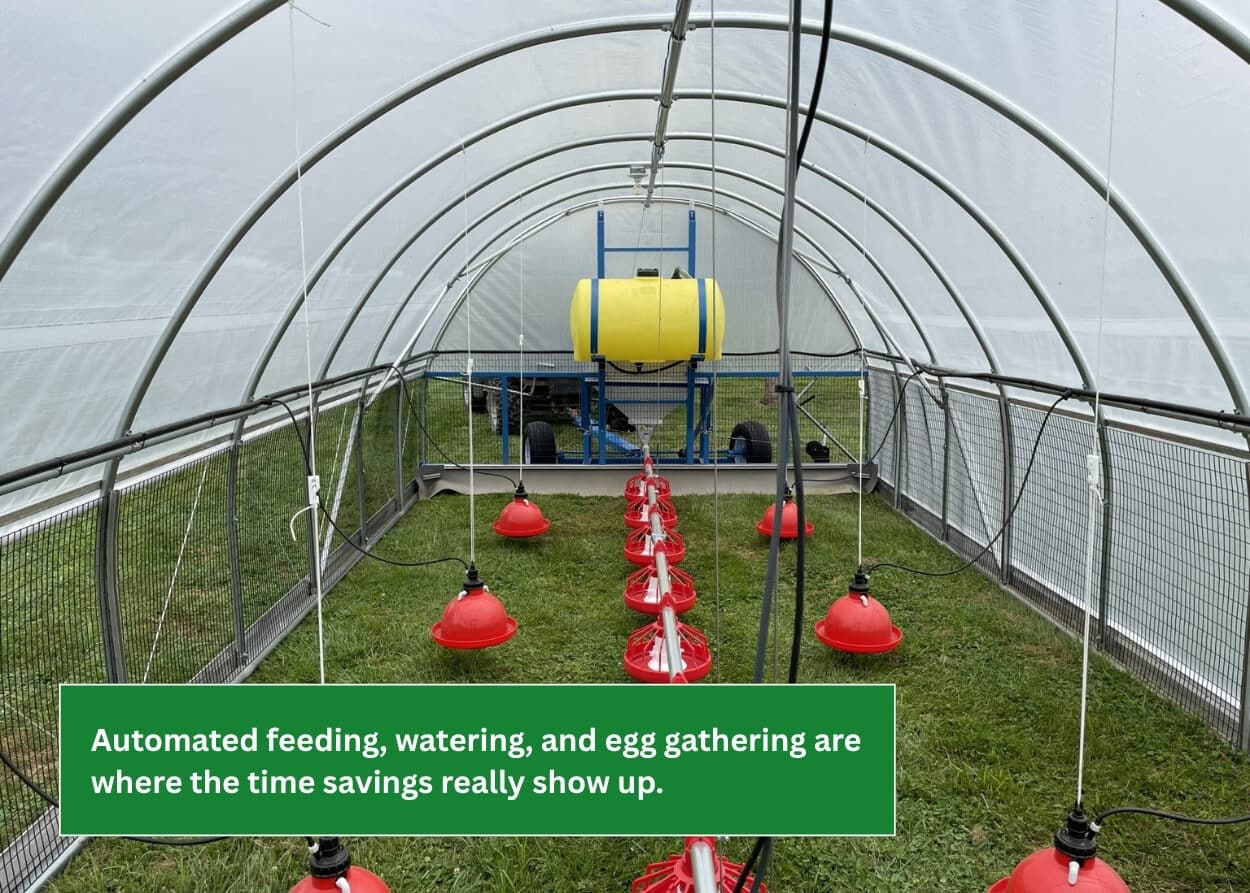
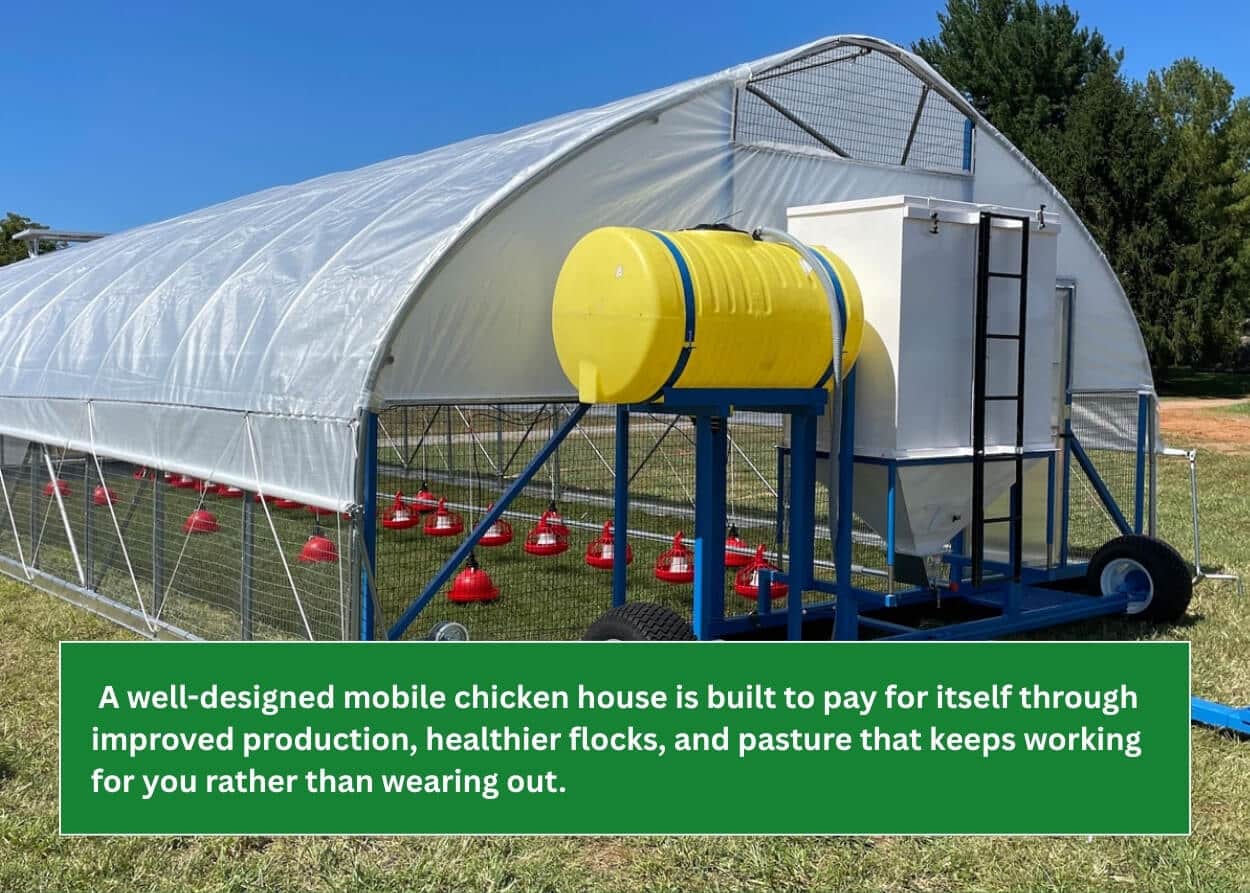
- Reliable feed and water systems. A one-ton feed storage system paired with an automated conveyor feeder means less feed spilled or scattered, and most houses can run ten days or more between refills. A 150-gallon gravity-flow water system holds two to three days of clean water, so you're not hauling water by hand every day.
- Operational flexibility. A solar-powered setup means automation doesn't depend on running electric lines to a structure that needs to move. The house can follow good pasture instead of being stuck wherever it was originally placed, which matters as your operation grows or your land changes.
Factors That Affect Your ROI
No two operations see the same numbers because ROI depends as much on daily decisions as on the equipment itself.
- Flock size. Larger flocks spread the cost of the house across more birds, which can improve ROI per hen, as long as labor and feed systems keep pace with the extra volume.
- Frequency of moves. We recommend moving houses daily. Skipping moves saves a few minutes today but costs pasture quality, cleanliness, and disease control later.
- Labor efficiency. Automated feeding, watering, and egg gathering are where the time savings really show up. A crank-and-belt egg gathering system, for example, lets you collect eggs from one spot instead of walking the length of the house.
- Equipment durability. A greenhouse-style build with a heavy-duty fabric cover keeps the house light enough to move easily while still holding up in wind and weather. Materials that last reduce how much you spend on repairs down the line.
- Maintenance costs. Fewer moving parts generally means fewer things that break. It's worth asking about warranty coverage and the expected lifespan of the materials before buying.
Who Benefits Most From a Mobile Chicken House?
Mobile chicken houses work across a wide range of operations, from small family flocks to larger pasture-raised producers.
Smaller farms often notice the labor relief first. One farm that switched from a homemade coop told us their hens used to stay close to the coop and make a mess, so they wanted a setup that would get the birds out into the pasture. Their first mobile house worked well enough that they bought a second one for the automation and low maintenance.
Larger producers see the value differently. As one of our customers put it, the two biggest costs in an egg operation are feed and labor, and automated systems like rollout nests, conveyor belts, and feeding systems cut down on both. When you're running hundreds or thousands of birds, small savings per hen add up quickly.
Demand for these eggs keeps growing. Outdoor access eggs, including pasture-raised and free-range, have grown from under six percent to roughly thirteen percent of the U.S. shell egg market over the past five years.
We've built our own model lineup around this range, from a three-hundred-hen house up to a thousand-hen house, because the labor and pasture benefits apply whether you're running one flock or several.
Bringing It All Together
The question isn't whether a mobile chicken house costs more upfront than a comparable stationary coop. It usually does. What makes the difference is what happens after the purchase: less labor spent hauling feed and water, healthier birds on rotating pasture, fewer losses from disease, and eggs that stay cleaner from nest to carton.
For most producers, these differences equal savings. And these savings add up over the life of the house, not in the first month. A well-designed mobile chicken house is built to pay for itself through improved production, healthier flocks, and pasture that keeps working for you rather than wearing out.
If you want to see what this could look like for your own flock, run your numbers through our free Profit Calculator, or reach out, and we'll help you figure out which model best fits your operation.
